
Private Mortgage vs Rent-to-Own: The Safer, Cheaper Path to Homeownership
Not all mortgage alternatives are equal. Here's the hard truth about some private lenders—and why rent-to-own may be the smarter, safer path to owning your home.
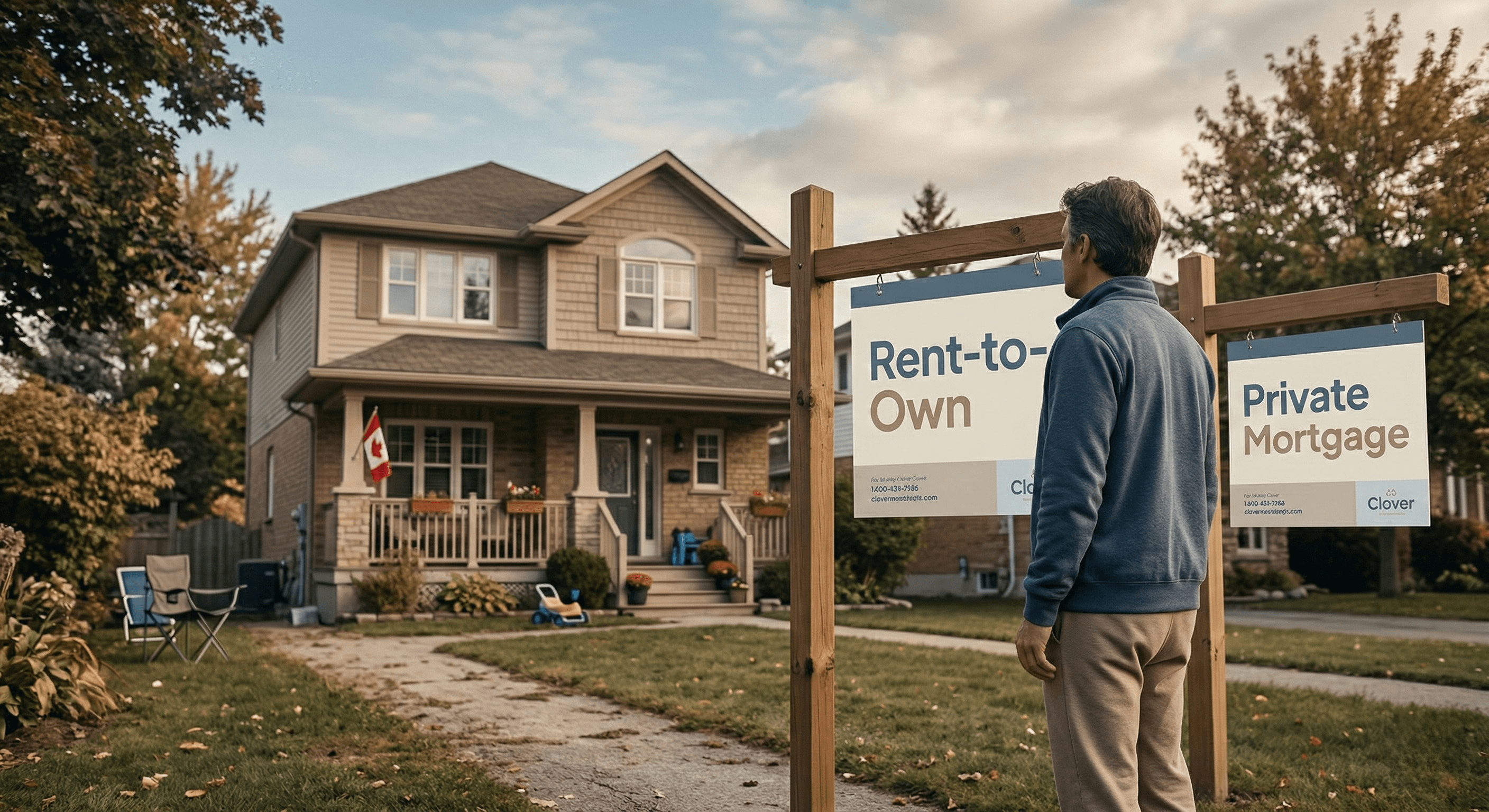
When traditional banks say "no" to your mortgage application, the search for alternatives can feel overwhelming. Two options that frequently come up are private mortgages and rent-to-own programs.
But here's what most people don't realize: these two paths are worlds apart in how they treat you, your money, and your dream of homeownership.
If you're considering a private mortgage, you need to understand what you're really signing up for. While not all private lenders are cut from the same cloth, the industry has earned its reputation for a reason. Let's pull back the curtain on how private mortgages actually work — and why rent-to-own might be the smarter, safer choice.
What Exactly Is a Private Mortgage?
A private mortgage is a loan from a non-institutional lender — meaning it's not from a bank, credit union, or traditional financial institution. These lenders are typically individuals or small companies willing to take on borrowers that banks have rejected due to poor credit scores, self-employment income, recent bankruptcy or consumer proposal, insufficient down payment, or a property type that banks won't finance.
Sounds helpful, right? Someone willing to give you a chance when the banks won't?
The problem is that "giving you a chance" often comes with a price tag that can trap you in a cycle of debt — or worse, cost you the home entirely.
The Unknown Side of Private Lending
The Bait: "We Can Help When Banks Can't"
Private lenders market themselves as the solution to your mortgage problems. They emphasize speed, flexibility, and approval rates that seem too good to be true. And often, they are.
Some private lenders aren't actually interested in you successfully paying off your mortgage. Their business model is built on something far more profitable: taking your home.
The Fees: Death by a Thousand Cuts
Unlike traditional mortgages where fees are regulated and relatively transparent, private mortgages can bury you in costs before you even sign.
Lender Fees (2–5% of loan amount): On a $400,000 loan, you could pay $8,000–$20,000 just for the privilege of being approved. This money goes straight into the lender's pocket on day one.
Broker Fees (1–3% of loan amount): Another $4,000–$12,000 to the person who connected you with the lender — payable immediately.
Legal Fees (Often Inflated): You're required to use the lender's lawyer, who charges premium rates. Where a standard real estate lawyer might cost $1,500–$2,000, private mortgage lawyers often charge $3,000–$5,000 or more.
Appraisal and Administration Fees: Usually $400–$800 for the appraisal, plus another $500–$1,500 in "processing" charges.
> On a $400,000 private mortgage, you could pay $15,000–$40,000 in upfront fees alone. That's money taken from your down payment or equity — money you'll never see again, regardless of whether the mortgage works out.
The Interest Rates: Paying Double (Or More)
While traditional banks currently charge around 5–7% interest, private mortgages typically range from 8% to 15% or even higher.
Here's what that means in real dollars:
| Scenario | Rate | Monthly Payment | Total Interest (25 yrs) |
|---|---|---|---|
| $400K — Bank Rate | 6% | ~$2,398 | ~$319,400 |
| $400K — Private Rate | 12% | ~$4,211 | ~$863,300 |
You're paying an extra $1,813 per month — over $21,000 more per year — just in interest. Over the life of the mortgage, that's an additional $543,900 going to the lender.
But here's the real kicker: most private mortgages aren't designed for you to hold them for 25 years.
The Terms: Where the Trap Closes
Short term lengths (1–2 years): Private mortgages are almost always structured as 1 or 2-year terms. This means you're forced to renew frequently — paying those massive fees all over again each time.
Interest-only payments: Many private mortgages require only interest payments, meaning your principal never decreases. You're not building equity; you're just paying rent to the lender.
Balloon payments: The full mortgage comes due at the end of the term. If you can't refinance — and remember, your credit hasn't improved because you've only been paying interest — the lender can force the sale of your home.
Renewal traps: When renewal time comes, the lender may increase the interest rate, add new fees, refuse to renew if market conditions have shifted, or offer terms so unfavorable you simply can't afford them.
The Endgame: A Business Model Built on Your Failure
Here's what many people don't realize: some private lenders are actually in the real estate acquisition business — disguised as lending.
The strategy is simple:
The borrower loses their home, their down payment, and every dollar paid in fees and interest. The lender profits three times over: fees, interest, and the property itself.
This isn't a conspiracy theory — it's a documented business model that courts have called "unconscionable" in numerous Canadian cases. But by the time you're in court, you've already lost everything.
How Rent-to-Own Offers a Different Path
Let's contrast this with a properly structured rent-to-own program.
Transparent, Reasonable Fees
In a rent-to-own agreement, you typically pay:
No hidden broker fees. No inflated legal costs. No administration charges that disappear into someone's pocket.
Time to Actually Improve Your Situation
Rent-to-own agreements typically run for 2–4 years, giving you real time to rebuild your credit score, pay down existing debts, establish consistent payment history, save for closing costs, prove income stability (especially important for self-employed buyers), and — for newcomers — secure Permanent Residency.
Unlike private mortgages that can position you to fail in 12 months, rent-to-own gives you room to succeed.
Building Equity While You Rent
Every on-time payment accumulates credits toward your down payment. By the end of a 3-year term, you might have built:
Compare that to a private mortgage where you're only paying interest and building zero equity.
A Purchase Price Locked In
With rent-to-own, the purchase price is agreed upon at the start. If the market rises beyond that locked-in price, you keep the equity between market value and your set price. Fair rent-to-own agreements also include adjustment clauses that protect both parties if the market declines.
With private mortgages, you're at the mercy of whatever appraisal the lender orders when your balloon payment comes due — and some use affiliated appraisers who lowball values to make refinancing impossible.
Alignment of Interests
Here's the fundamental difference: in a private mortgage, the lender profits when you fail. In a well-structured rent-to-own program, the provider succeeds when you succeed.
A legitimate rent-to-own provider wants you to make your payments on time, improve your credit, and exercise your option to buy. Your success is their success. That's alignment.
Red Flags to Watch For in Private Mortgages
If you're still considering a private mortgage, watch for these warning signs:
When Might a Private Mortgage Make Sense?
To be fair, there are limited circumstances where a private mortgage might be appropriate:
Even in these cases, you need an independent real estate lawyer reviewing every word of that agreement.
The Bottom Line: Choose the Path That's Built for Your Success
Private mortgages and rent-to-own programs both serve people who can't access traditional bank financing. But their intentions and structures couldn't be more different.
Private mortgages often:
Clover's rent-to-own program:
Before signing anything — whether it's a private mortgage or a rent-to-own agreement — invest in independent legal advice. A $1,500 lawyer consultation could save you from a $500,000 mistake.
Your dream of homeownership shouldn't come with a nightmare attached. Choose the path that's designed to get you across the finish line.
Do You Want to Rent for 4 More Years or Own While You Save?
Ready to see if rent-to-own is the right path for you? Visit our pre-qualification page to start your journey toward homeownership — on terms that actually work in your favour.
Related Articles
You Have the Income, so Why Won't the Bank Approve Your Mortgage?
Strong income. Down payment saved. Still declined by the bank? Learn why mortgage approvals fail and how we help Canadians get into homeownership.
The Consumer Proposal Timing Trap: Why Your Rent-to-Own Term Shouldn't End When Your Proposal Does
Most A-lenders want 12 to 24 months of clean credit after your consumer proposal is discharged. If your rent-to-own term ends the same year, you have no runway and your option deposit is what's at risk.
From Renting to Owning: Michael and Danielle's Three-Year Journey
A family unable to qualify for a mortgage stayed in their home and became owners by using rent-to-own to build the credit and financial profile their lender required.